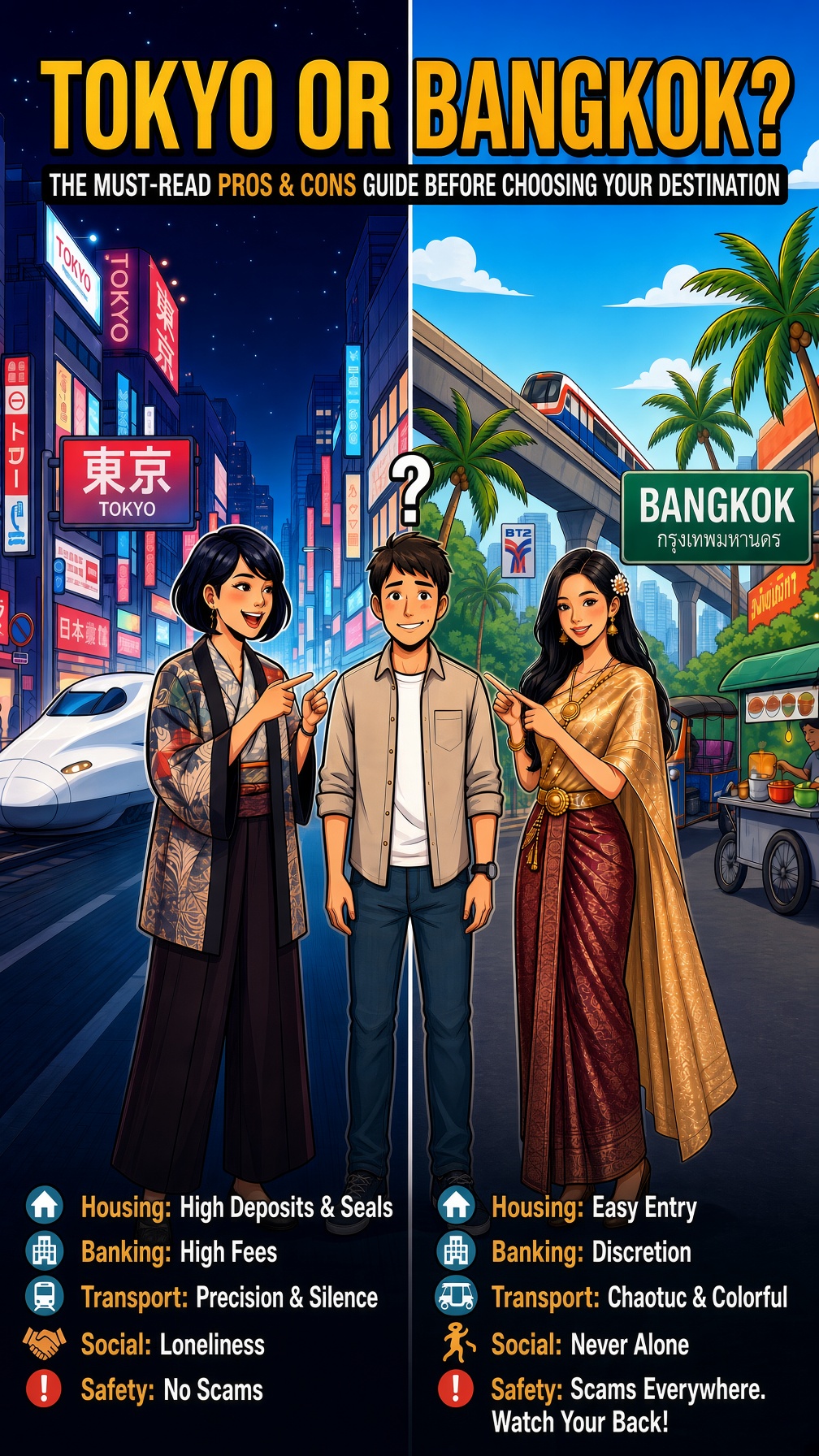
Tokyo or Bangkok
About the author

Welcome to Tanoshi Book! As the founder, my goal is simple: to make reading a fun, joyful, and inspiring experience for everyone.
More about the author →Read the first chapter free
If you think finding an apartment in Tokyo is a standard consumer transaction where your money and qualifications do the talking, think again. Stepping into the Japanese rental market as a foreigner feels less like renting a home and more like running a gauntlet of closed doors.
Japan’s real estate ecosystem remains stubbornly anchored in the stone age. Up to 99% of traditional real estate agencies and landlords operate under a nationalist gatekeeping model that outright rejects foreign tenants.
The Polite Rejection Trap: Tested and Denied
You don't fully understand the reality of Tokyo's housing until you test it yourself on the ground.
When my friend and I systematically tested agencies in person, we experienced the psychological whiplash firsthand. You walk through the glass doors and are greeted with legendary warmth: beaming smiles, a seat, a cold bottled tea, and absolute deference.
Then comes the quiet trap. You don’t even need to hand over your passport; your appearance or your name is enough. The moment you point to a specific apartment you want to tour, the atmosphere shifts behind a mask of corporate hospitality. Suddenly, that exact listing is "just rented out." Point to another, and that one is "suddenly unavailable" too. Within minutes, you realize the grim truth: nothing is available for you.
Even if you lay out an unassailable profile—holding a Permanent Residency card (the gold standard of legal status) backed by secure employment with two jobs—it makes zero difference. The moment the reality of your foreign status registers, the invisible barrier slams shut.
And that is the extra layer of cruelty: the rejection isn't loud or aggressive. They remain impeccably polite, bow deeply, express profound "regret," and gently eject you from the office. You leave feeling both insulted and gaslit, realizing that centuries of refined hospitality can be weaponized just as effectively to lock you out.
The Price of Exclusion: A Rat Hole vs. A Luxury Resort
The gatekeeping isn't just discriminatory; it is economically absurd. When you finally manage to break through Tokyo's walls as a foreigner, the financial return on your investment is dismal.
In Tokyo, a cramped, depressing rat hole—a tiny three-tatami room with a micro-kitchen where you can barely stretch your arms—will cost you a small fortune in rent, key money, guarantor fees, and traditional hanko seals.
Compare that to Bangkok, where the housing market is designed for mobility, ease, and lifestyle. In Bangkok, that exact same price tag unlocks a luxurious, fully serviced apartment in a modern high-rise tower complete with a sparkling rooftop swimming pool, a fully equipped gym downstairs, 24/7 security, and endless convenience.
In Tokyo, you pay top dollar for a cramped box and the "privilege" of begging a landlord to let you live there. In Bangkok, you pay a fraction of the cost, receive genuine, welcoming hospitality, and live like a king.
Keep reading in the app.
Coming soon on Tanoshi Books
Read now on Tanoshi VideoRead the free chapterMore books you may like
 Goodnight, Little Farm
 Voice of Nature
 Where Is the Bird?
 Disconnected